The paper of "Comparative genomics and time-course transcriptomics uncover homoeologous exchange events reshaping glucosinolate metabolism in Brassica napus" has been published on Molecular Horticulture. Congratulations!
ORecently, Molecular Horticulture published an online research article jointly completed by multiple institutions including the Institute of Oilseed Crops Research, Chinese Academy of Agricultural Sciences, Shanghai Jiao Tong University, Huazhong Agricultural University, Hebei Agricultural University, and the University of Copenhagen, Denmark, entitled Comparative genomics and time-course transcriptomics uncover homoeologous exchange events reshaping glucosinolate metabolism in Brassica napus.
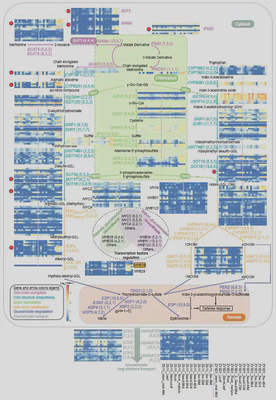
In this study, a high-quality chromosome-level reference genome was assembled for Zhongyou 821 (ZY821), a representative high-glucosinolate cultivar of Brassica napus. Combined with comparative genomics and multi-tissue time-course transcriptomic analyses using Zhongshuang 11 (ZS11), an elite low-glucosinolate cultivar, this work revealed that homoeologous exchange (HE) enhances the genetic potential for glucosinolate (GSL) accumulation in rapeseed. It further elucidated the genetic mechanism by which HE acts synergistically with major-effect genomic structural variations (SVs) that negatively regulate glucosinolate content to drive glucosinolate divergence. These findings provide important theoretical foundations and genetic resources for the genetic improvement of glucosinolate traits in rapeseed.
Full text article link: https://pmc.ncbi.nlm.nih.gov/articles/PMC13435445/